



“People said not to go, but the police said, she’s a reporter. No one was in the victim’s house. The body was in a corner of the house. I went and saw it. The marks of attacks. I liked to be able to see for myself. After that, I felt that people saw me differently.”
— Collective biography workshop, July 2023, Banda.
Through our years of reporting, when our stories were published and we took them back to the sources, our readers, the police, and the administration, they created a record of lives lived. They moved people and institutions. Sometimes they resulted in anger and disbelief; sometimes in the overwhelming sensation of being seen; sometimes in the beginning of the construction of a road or a school wall; and sometimes they made an arrest inevitable. In some cases, where we were present along with hundreds of other journalists – for instance, the case of the rape and murder of a dalit girl in Hathras district of Uttar Pradesh – we highlighted the embedded, existing realities of caste and patriarchy, and how dalit subjects at the centre of big news stories are abused.
But now we took a step back, or a step forward, and looked more closely: not at how our work made an impression on the external landscape, but at the actual act of doing it, and what it was doing to us, within us? What did the role of playing witness where no one else would entail?
“I was at the end of a small lane, at the last ramshackle house. There had been a light rainfall and my feet stuck to the wet mud. There was a door, if you could call it that, and a lima bean plant with pink flowers growing around it. The flowers were a delight to see. A woman came out wearing a maxi, with a torn and dirty scarf covering her head. I tried to tear my attention away from her clothes to the questions I had for her. But I couldn’t help myself – I kept looking at her dupatta, the condition of her house, and the children playing in the wet dirt. How did they live? How must she be running her household? What was the reason for her condition? Just as she told me who was responsible for her husband’s death, a black shadow fell over my mind. I was quiet, my body rooted to the ground, as if it had been nailed to the spot. I watched the woman and how fearlessly, uninhibitedly she spoke. I had to do this story. But I could meet this man, her husband’s murderer, anywhere as I went about my work. What if he came to my house and harassed my family? He wouldn’t – why would he? We hadn’t done anything wrong. I was just telling the truth, this woman’s truth. What if she changed her story? She wouldn’t – she was on video. Let me complete my reporting and then I would see what to do. I was caught up in my fear and stubbornness, hurt by my eagerness to shape this story, much like a stone carver intent on completing the sculpture, no matter how much his hands ached.”
The writer was recalling reporting the cover-up of a quarry worker’s death, which had happened close to her own home. She was intimately familiar with the quarry owner’s influence. He was a powerful man, occupying a senior position in the municipality, and she often ran into him. But once we knew how things actually operated, and the nexus of money and power that makes injustices against the more vulnerable possible – even necessary, to keep the social and economic structures intact – we could never return to keeping silent, even if silence was the prudent choice.
A situation where we would not only question, but follow the trail from a dead body in a quarry – rushed to a neighbouring district hospital so as to minimise visibility – to the quarry owner and expose this truth had once been unimaginable. Each time, the perils of witnessing and publishing the story were a little different. Our own sense of what the power of being a local journalist could and should be wrestled constantly with the reality of the repercussions this power could carry. The sensation of power – thrilling and least anticipated—underlined by threats to us or our families, became familiar to us slowly, and was folded into the particular pleasure of occupying this once-unimaginable role in our communities.
Sometimes, the urge to report on a familiar story was knotted with our trajectories of social mobility and what role we now held in our communities. Was a local reporter an activist and community member before being a journalist? Poverty and hunger, amplified by caste, were conditions we had been immersed in for most of our lives. Some of us had been bonded labourers ourselves, working in cruel conditions. Now, going “back” to these contexts and communities to report as “professionals” threaded the new power we held – of being able to bring attention to these voices and realities – with a responsibility, and at times a debilitating need, to do more.
Many of us had been part of local dalit collectives and collective action around gender and caste violence, scarcity of water, and livelihoods. We had built our awareness of our rights through protests against sexual assault and caste violence, in community meetings with women, and by accompanying case workers to intervene in cases of domestic violence. As feminist media practitioners, our personal lives and circumstances bled into our work and organisational functioning. Embracing the identity of journalists involved continuous reflection on, and attempts to separate, our roles as journalists and activists. To maintain our credibility in the field, we constantly tried to hold the line between reporting on a story and actively intervening. We were often asked by sources what we would be able to do for them. We would involve others – individuals and organisations—to take over where we had left. We would say that our role was to write, to bring things into the open. This was part of our rulebook – the same one that idealises “objectivity”. However, situations in the field often make this difficult to adhere to.
The tension between these two identities – the local reporter always cognizant of and implicated in the political underpinnings of our stories, and the “objective” and distant reporter – was a painful one. Did a history and standpoint of marginalisation allow for objectivity at all? How did we separate the feminist instinct to shift the balance of power and injustice from the reporter’s priority to witness? Did we have a choice about discarding the “activist” label? This, like the other hindrances to our coming into public, professional roles, was a constant negotiation, sometimes renewed with each story we covered.
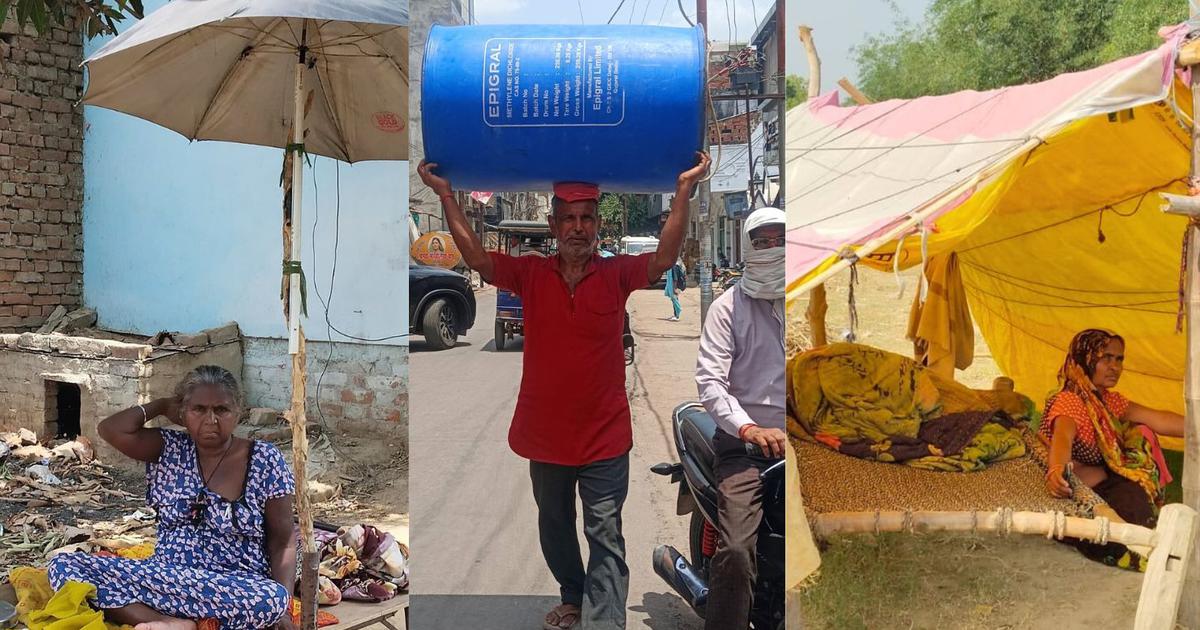
“I reached the village to see the people scattered all over. Around us were chana and wheat fields. The wheat was not yet ripe for harvest. The chana was just sprouting. Some people were roasting ears of wheat on fires, and some were feeding green chana to their children. I stood in the middle, looking around. The cooking stoves were empty. The pots and pans were clean and set aside. Containers for the wheat were empty. Not even salt had been ground on the mortar stone that day. The children sat around, mouths empty and yearning. Some elderly people lie on charpais, moaning. I could not gather the courage to speak to anyone. The police had not let them go to work since the day after the lockdown was announced. They had beaten them with sticks and sent them back home. My body felt heavy with sadness and pain. People were looking at me, and I had nothing to give them. I am a journalist, not a social worker, I thought – what am I doing? My job was to report the story. I started the Facebook Live, and began to show the village, the pots and pans, the stoves and the empty containers. A 40-year-old woman held my hand tightly and took me into her hut. “See this empty container,” she says, “See this box of rice. Is there any rice in it?” She made me record her every grievance. “My children cry for rotis. What do I tell them?” My heart burst, thinking of their hunger. I kept recording.”
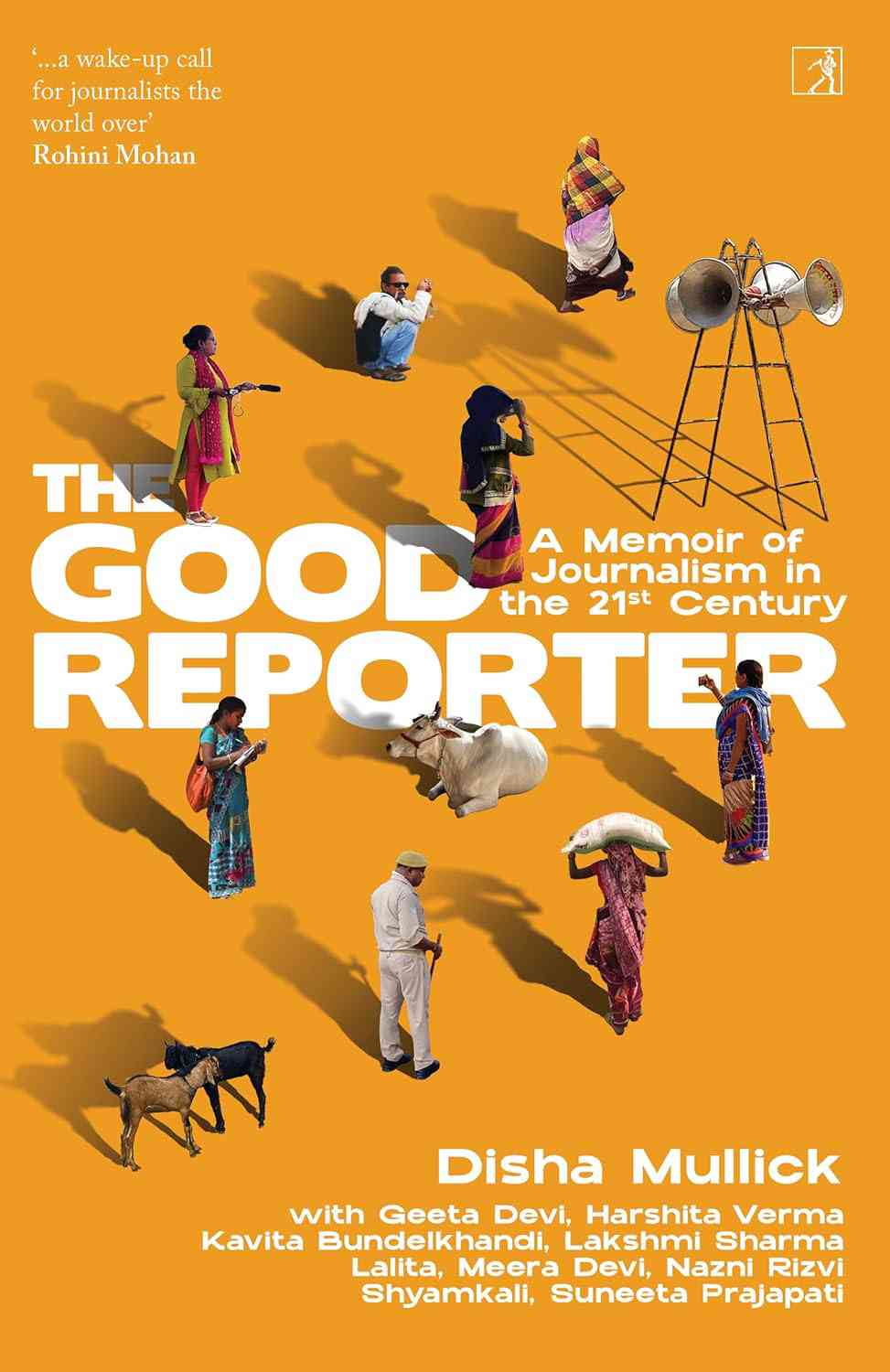
Excerpted with permission from The Good Reporter: A Memoir of Journalism in the 21st Century, Disha Mullick with Geeta Devi, Harshita Verma, Kavita Bundelkhandi, and Lakshmi Sharma, Simon and Schuster India.
